
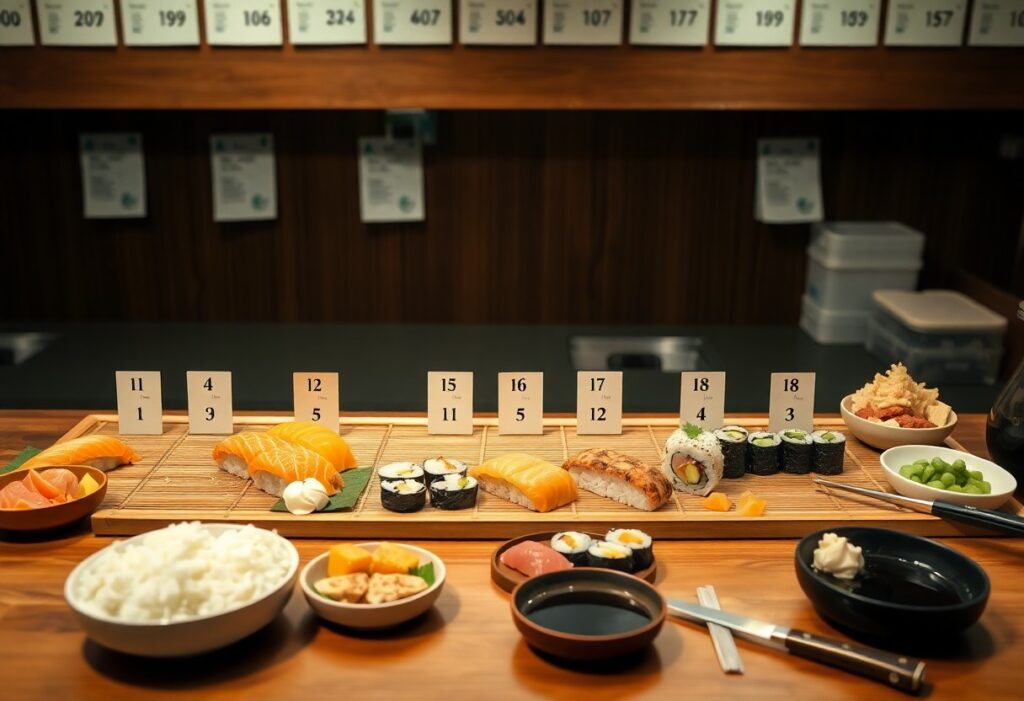
You’ll learn how to prepare sushi safely and creatively in ten clear steps; pay attention to fresh ingredients, strict hygiene because of possible risks and discover creative variants. More details: How to make sushi – 10 easy steps.
Key Takeaways:
- Basics: Perfect sushi rice, matching ingredients (nori, fresh fish/alternatives) and basic tools are crucial.
- Step-by-Step Technique: Following the 10 clever steps makes it easy to prepare, roll, and cut rice for an even result.
- Creative variants: Own fillings, vegan/boil-proof alternatives and appealing presentation enable diverse, individual sushi creations.

Cooking sushi rice properly
You prepare sushi rice carefully: wash, soak, measure exactly and steam gently. This is the only way to achieve the desired texture and the typical shine.
Note: too much water makes the rice mushy, too little stays hard. With the right technique, you can achieve perfect stickiness for rolls and nigiri.
Wash the rice thoroughly
You rinse the rice in a bowl and change the water until it stays clear. Important: wash until the water is much clearer, then you remove excess starch.
Just rub the grains gently so they don’t get damaged; rubbing too hard can destroy the structure. Gentle swirling is enough to give you shiny, separated grains.
Measure the exact amount of water
Use a reliable ratio: about 1 part rice to 1.1 parts water (volumetric) as a starting point. Measure with a kitchen scale or accurate measuring cup, because exact quantities are crucial.
If you take more water, the rice will become mushy; if it is too little, it remains hard. Adjust the amount slightly to the type of rice and humidity.
For precise results, weigh the rice and calculate the water by weight (e.g. 180 g rice ≈ 198-200 g water). Use a kitchen scale instead of rough estimates.
Season the rice
Season the still warm rice with the prepared vinegar-sugar-salt mixture; pour them evenly over the top and carefully fold them in so that the grains shine and are not crushed.
Pay attention to balance: too much vinegar makes you sour, stirring too hard makes mushy rice. Use a fan or fan to let the rice cool down shiny and sticky .
Carefully fold in the vinegar mixture
Pour the mixture in a thin stream and work with a wooden spatula in cutting motions; you turn the bowl, not the rice, to separate grains without pressure.
Avoid stirring vigorously: overmixing destroys the structure and leads to a mushy result. The goal is an evenly flavored, fluffy rice.
Allow to cool to room temperature
Let the seasoned rice cool at room temperature before processing it; filling too hot makes nori soft, standing too long can promote bacterial growth .
Cover the rice loosely with a damp cloth to prevent it from drying out; It is ready to serve when it is lukewarm and sticky, but not warm.
For best results, aim for a temperature of around 20-25 °C, work within 1-2 hours and do not store the rice for more than 2 hours. max. 4 hours unrefrigerated; a damp cloth prevents skin formation and maintains the texture.
Prepare fresh ingredients
You only choose ingredients of the best quality: rice, nori, vegetables and especially fish. Look for clear eyes and a firm smell in the fish; low odor and firm bite are positive, while a fishy smell is a warning sign.
Prepare everything cold and work quickly to maintain quality. Maintain cold chains (≤4°C) and avoid cross-contamination by using separate cutting boards and clean hands or gloves.
Cut the fish into strips
You use a very sharp knife and cut against the fiber into even strips of about 3-5 mm. Carefully remove the skin and bones so that the texture in the mouth is right.
Raw fish can carry parasites; to protect it, freeze it beforehand (e.g. −20 °C for several days) or use only tested sashimi-quality fish. Work on a separate board and keep the fish cool at all times to avoid cross-contamination .
Finely chop vegetables
Cut cucumber, carrot and bell pepper into fine sticks (about 2-3 mm) for even bites. You can use a sharp knife or a mandolin; even pieces ensure a professional look and even cooking.
Wash and dry the vegetables thoroughly so that the rolls do not get soggy. Choose crunchy varieties and remove seeds to keep the filling clean.
For hard vegetables like carrots, you can blanch briefly and then quench in ice water to keep crunchy; in the case of cucumbers, it is recommended to remove the seeds to avoid excess water . Store finished pens briefly refrigerated and well covered.
Placing nori sheets correctly
Place the nori sheet on the work surface so that you can see the rough side upwards – that’s where the rice adheres best. Make sure the sheets are dry and undamaged, as wet or torn nori can crack or get soggy as it rolls.
Position the sheet stably on the mat so that you can roll cleanly later. A small protrusion at the bottom makes it easier to close; apply only light pressure so that the nori does not tear.
Rough side to top
Identify the rough side on the matte, shaggy finish and place it upwards – this will ensure that the rice adheres reliably. Avoid touching the surface with hands that are too wet, as moisture makes the nori soft and prone to cracking.
Align on the bamboo mat
Place the nori flush with the edge of the bamboo mat with the smooth side down so that you have a grip while rolling. Leave a small protrusion at the bottom so that the roll closes tightly later; Don’t roll too tightly, otherwise the nori can tear.
Ideally, place a thin layer of cling film on the mat to protect the nori from moisture from the mat and make it easier to clean. Make sure that the seam is at the bottom later and that the mat stays clean to get even, clean rolls .
Spread the rice
You spread the still warm rice evenly on the nori, about 3-4 mm thick, and be careful not to use too much rice . Work with wet hands so that the rice does not stick, and read additional tips in the article Make sushi yourself – 5 tips from the sushi master.
Moisten fingers with vinegar water
You moisten your fingers with lightly cleaned vinegar water to avoid stickiness and add flavor. Be careful not to use too much water, otherwise the rice will become males and the rolls will become soft.
Leave the border blank at the top
You leave a border of about 1-2 cm free at the top of the nori so that the mat can be closed cleanly when rolling. A clean rim prevents the roll from bursting.
More info: If you fill too far up or don’t leave a free edge, the roll can tear and fill leak out during pressing; keep the edge dry and clear to ensure a stable result .
Placing Creative Fills
You place fillings evenly, just around the edge, so that the roll closes neatly. Use thin strips and pay attention to balanced textures; too much filling makes the roll unstable. See basic instructions: How to make sushi yourself | Recipe guide for beginners.
Work quickly and keep ingredients cold; Fish used raw must be from a trusted source and stored below 5°C to minimize risks.
Combine fish and vegetables
Combine a soft protein content with crunchy vegetables for contrast. Avoid highly watery ingredients such as thick cucumber slices, which soften the nori sheet. Finely cut everything – finecut ensures clean, stable rolls.
Add cream cheese or sauces
Use cream cheese sparingly so that it doesn’t cover the fish; apply thinly for creaminess. When it comes to sauces, it’s better to work selectively, too much sauce makes rolls mushy.
Choose spicy mayo blends, citrus, or soy reductions to elevate flavors, and pay attention to portion control to maintain balance.
After rolling, you should store sushi in a cool place and consume it within a few hours; do not leave it at room temperature for a long time to avoid food risks .
The perfect rolling technique
When rolling, make sure to make sure you move calmly, evenly: Expose the edge of the nori sheet, spread the rice and ingredients so that the center is not overcrowded. With the bamboo mat you pull the roll tightly so that you get a compact, even silhouette at the end.
Roll quickly but controlled, and correct immediately if filling shifts. Avoid too much pressure, as pressing too hard can tear nori and destroy the structure.
Apply even pressure
Place both hands flat over the mat and distribute the pressure from the fingers to the palm. You keep the tension without squeezing: even pressure ensures a firm roll without crushed ingredients.
Roll forward and pull the mat back slightly to tighten the roller. When you’re done, press the seam short; a sharp knife prevents crushing when cutting.
Seal the end with water
Wet the exposed nori edge sparingly with water or a moistened finger, just enough for the seam to adhere. Too much water makes nori soggy, so control the amount.
Place the seam side down and hold lightly for a short time until the connection holds. A well-sealed end prevents the roll from opening again – this is crucial for durability and appearance.
As an extra trick, you can add a touch of rice vinegar to the water to increase stickiness, or use a small grain of rice as a “glue”; make sure to use it sparingly so that nori does not soften.
Create inside-out variants
With the inside-out roll, you have to turn the roll around: rice on the outside, nori on the inside. Make sure your hands and utensils are clean, as contamination can be dangerous if the rice surface is open. With creative fills, you can achieve visually striking results.
Practice rolling with plastic wrap and a bamboo mat so that you achieve even pressure and the filling doesn’t spill out. Short rest periods prevent the nori from getting soggy.
Flip rice to nori
Prepare the rice slightly cooled and moisten your hands with vinegar water so that it does not stick. Place the nori on the mat, spread a thin layer of rice on cling film and carefully turn it over the nori.
Make sure to spread the rice thinly and evenly ; too much rice makes the roll unstable. If you wait too long, the nori will soften and the structure will suffer.
Decorate with sesame seeds
Sprinkle roasted sesame seeds on the outside of the rice or roll the sushi briefly in a sesame mixture. Roasted sesame seeds enhance the aroma and provide texture; black sesame offers contrast.
Press the sesame seeds lightly to make them stick and serve the roll fresh to keep the sesame seeds crispy. Be careful with guests with sesame allergy.
For a more intense flavor, you can roast sesame seeds briefly in a dry pan before sprinkling; Watch it closely, for it burns quickly and becomes bitter.
Clean cutting
You make sure that every piece of sushi looks impeccable and is safe to eat. Use a sharp, clean knife and clean the blade in between so that rice doesn’t stick. Make sure to work calmly and evenly when cutting so that the filling does not spill out.
Moisten a sharp knife
Before you cut, dip the blade briefly in water or wipe it with a damp cloth. This reduces rice adhesion and ensures clean cuts. Be careful: a wet knife can slip away more easily – keep your fingers secure.
Divide into eight pieces
Cut the sushi roll first in half, then each half in two, and finally in two, so that you get eight even pieces . Use even pressure and cut in a pulling motion, not sawing.
Wipe the knife after each cut to avoid sticking, and straighten the pieces with tweezers or the knife; clean edges improve appearance and enjoyment.
Serve in style
You present sushi on simple plates or wooden boards and pay attention to color and shape contrasts. Fresh ingredients and clear lines enhance the look; raw fish must be kept well chilled .
Use small bowls for soy sauce, wasabi and ginger and serve matching chopsticks. Don’t let sushi sit for long; do not observe the room temperature for raw fish for too long .
With wasabi and ginger
You place wasabi sparingly: Wasabi is very spicy, a small dab is enough to emphasize flavors. Ginger serves as a tongue cleaner between bites, not as a topping.
Serve both in separate bowls or on small spoons, elegantly portioned. This will help you maintain texture and prevent stronger flavors from masking the sushi.
Provide suitable soy sauce
Choose a mild shoyu or gluten-free tamari depending on your taste; too salty soy sauce can mask ingredients.
Fill small bowls and possibly offer several varieties, dipping only the fish side lightly instead of drowning the whole piece.
You can vary soy sauce with a little citrus (ponzu) or a touch of wasabi to complement delicate flavors.
Make your own sushi – 10 clever steps for creative variations
In ten clear steps, you will learn how to cook perfect sushi rice, cut nori correctly, combine creative fillings and roll precisely. Using temperature control techniques, proper knives, and variable ingredients, you’ll develop safe, flavorful options, from vegetarian to fusion. Practice cutting and presentation to achieve consistent results and master your own recipes with confidence.
FAQ
Q: What ingredients and tools do I need to make sushi at home according to the “10 clever steps”?
A: For basic sushi, you’ll need sushi rice (short-grain), rice vinegar, sugar, salt, nori leaves, fresh sashimi-quality fish or alternative proteins (smoked salmon, shrimp, tofu), vegetables (avocado, cucumber, carrots), soy sauce, wasabi, and pickled ginger. Tools: bamboo mat (makisu), sharp filleting knife, rice cooker or pot, rice washing bowl, wooden bowl (hangiri) or large plastic bowl, cling film and a damp cloth. Quantity tips: for 4 people approx. 500 g uncooked rice; for raw fish, only sashimi quality and pay attention to the cold chain when purchasing.
Q: How do you make the perfect sushi rice step by step?
A: Wash rice thoroughly until the water runs clear, soak for 30 minutes. Cook in a ratio of approx. 1 part rice to 1-1.1 parts water (depending on the type of rice), let it rest briefly. Seasoning mix: Heat rice vinegar, sugar and salt until sugar is dissolved (e.g. 120 ml vinegar, 50 g sugar, 10 g salt for 500 g cooked rice, adjust quantities). Place the rice in a shallow bowl, fold in the seasoning evenly, cooling with a fan or fan, without mashing, until the rice is lukewarm. Keep hands moist so that the rice does not stick; Goal: shiny, sticky grains that hold shape.
Q: What creative variants can I derive from the 10 steps?
A: Classics: maki (rolled), uramaki (inside-out), nigiri (hand-shaped) and temaki (hand roll). Creative variants: sushi burrito (large nori, many fillings), gunkan (seaweed boats with fluffy toppings such as fish roe or salad), tempura sushi (deep-fried fillings for crunch), vegan variants (marinated tofu, grilled vegetables, ripe avocado), fusion (quinoa instead of rice, cream cheese & salmon). Combine textures (creamy + crunchy), flavors (sweet and sour pickled vegetables), and sauces (spicy mayo, ponzu) for variety.
Q: What are some technique tips for rolling, cutting and shaping maki, uramaki and nigiri?
A: For maki: Nori glossy side down, spread rice thinly (about 2/3 sheet), leave edge free, place filling in the middle, roll tightly with bamboo mat but not crushing. For uramaki: rice on the outside, turn nori with cling film and mat or rice paper as an alternative; Sesame/tempura crunch on the outside. For nigiri: form small portions of rice (about the size of table tennis), press down lightly, cover with a narrow slice of fish; optional wasabi between rice and fish. Cutting: very sharp, slightly moistened knife, cut in one clean stroke, wipe the knife in between. Important: not too much rice, clammy hands, even pressure.
Q: How do I store homemade sushi properly and what are the safety rules for raw fish?
A: Sushi is best eaten fresh; Store in the refrigerator for a maximum of 24 hours. Buy raw fish only in sashimi quality, transport it chilled and store it at ≤4 °C. Many traders freeze fish beforehand to kill parasites – check the labeling. Rice separately airtight so that it does not dry out or become mushy; wrap finished rolls in cling film. Avoid reheating several times; smells or tastes a little unusual, throw away. Hygiene: Work cleanly, avoid cross-contamination between raw fish and other ingredients.