Perfect Sushi Rice – 5 Easy Steps for the Ideal Sticky Rice Result
Introduction
If you’ve already optimized the amount of rice and washing, now shift the focus to rest times, temperature, and the right ratio of rice vinegar; here, precision decides on stickiness and texture.
Visual examples – for example Wow 🤣 Sushi Rice 🍣👏 Let’s make the perfect … – help you avoid overcooking and achieve the perfect consistency .
Key Takeaways:
- Choosing high-quality short-grain rice and thorough washing/soaking are crucial for optimal stickiness.
- Precise water-to-rice ratio and gentle steaming/boiling ensure an even consistency.
- Gently stir in the vinegar-sugar-salt mixture and let the rice cool gently to preserve shine and texture.
The choice of grain
Make sure you choose short-grain rice; for the classic result, follow the recipe: Sushi Rice – Basic Recipe for Japanese Glutinous Rice. The type of rice determines stickiness and texture.
Don’t forget to pay attention to the origin and year of harvest, as you will get more consistent results if you prefer fresh, high-quality grains.
Short Grain Obsession
Short is not the same as good: you have to pay attention to the variety and protein content; Strains like Koshihikari provide better binding, so you should prefer them.
Quality without compromise
If you prefer brands with transparent origin and controlled processing, you will reduce downtime during cooking and ensure uniform adhesive behavior.
It’s also worth looking at organic or direct import options, as this often gives you more consistent grains and better results.
The ritual of washing
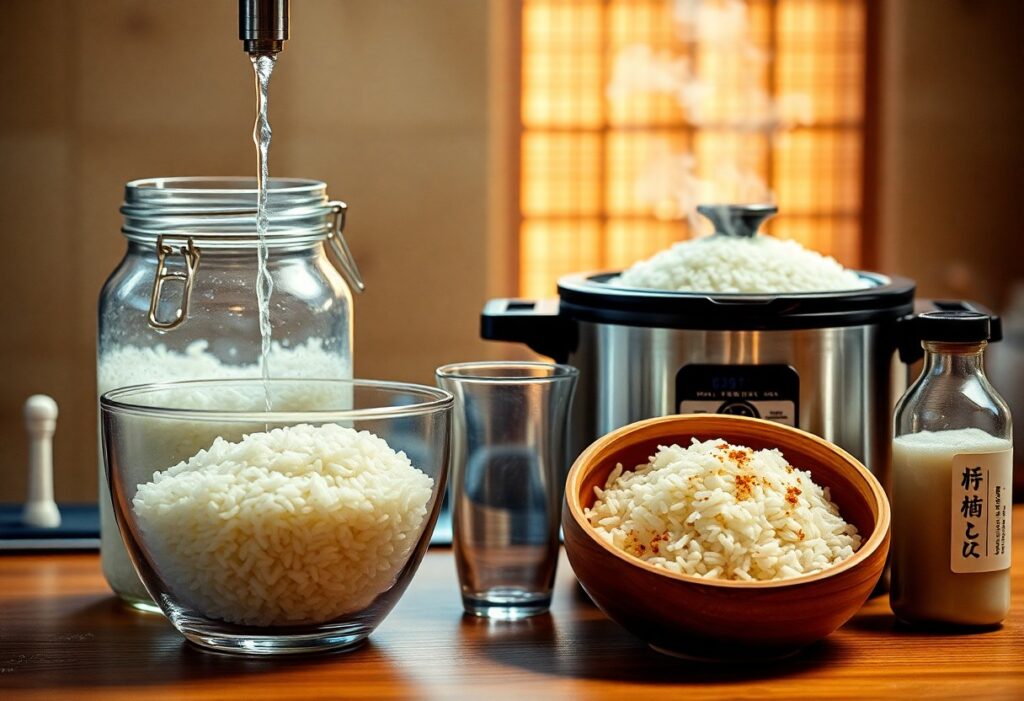
Start moving the rice in cold water; you will see the turbid starch flow out. Rinse until the water is much clearer and the grain no longer appears milky .
Rinse gently and in several courses so that you don’t leave too much starch in the rice; Washing too hastily will grind grains and reduce the texture.
Starch Elimination
Remove excess starch by rinsing the rice with cold water 3-4 times, alternatingly; so you achieve ideal sticky result without mucus.
Avoid long, hot soaking, as this can overflow the rice and lose the graininess; short rest periods are usually sufficient.
The softness of the hands
Move the rice with gentle circular motions, using your palms so that the grains remain intact and do not break; hard friction makes the rice sticky and mushy.
Massage only lightly and in a controlled manner, because pressing too hard leads to mushy rice; keep the movements constant and rhythmic.
Make sure your hands are clean and dry, short fingernails prevent damage; this way you preserve the structure and achieve even graininess.
Taming the heat
Adjust the flame so that the rice boils briefly and then immediately turns into a gentle simmer ; you prevent overcooking and burning on the bottom of the pot.
Observe vapor development and bubble formation; you should only lift the lid if there are visible problems, because not opening the lid ensures even cooking and optimal stickiness.
The precise ratio
Precisely measured liquid is crucial: work with weights and aim for a ratio of 1:1 (weight), with some types of rice slightly increased values such as 1:1.1.
Miss rice and water accurately with a scale or measuring cup; for example, 300 g of rice to 330 ml of water will give you a reliable basis for consistent results.
The Sacred Rest
After the end of the cooking time, be sure to let the rice rest covered for 10-15 minutes so that the grains absorb the steam and the structure firms.
Be sure to gently loosen with a rice spoon only after resting; vigorous stirring destroys the proper texture and makes the rice too sticky.
In addition, you should cool with a fan during this phase if necessary and slowly bring the rice to a body temperature before mixing in the sushi vinegar to preserve shine and bite.
The Holy Elixir
Focus on immediately and evenly lifting the warm vinegar mixture into the freshly steamed rice; this prevents lumps and achieves the typical, sticky texture that sushi demands.
When folding, make sure to work gently and not press the rice; this is the only way to maintain the graininess and achieve the ideal adhesive behavior.
The vinegar balance
A balance of rice vinegar, sugar and salt is optimal, which you adjust to taste; too much vinegar covers the nuances, too little makes the rice look flat.
Mix the ingredients gently until the sugar and salt have dissolved, and add the solution lukewarm so that you don’t damage the texture.
The technique of cutting
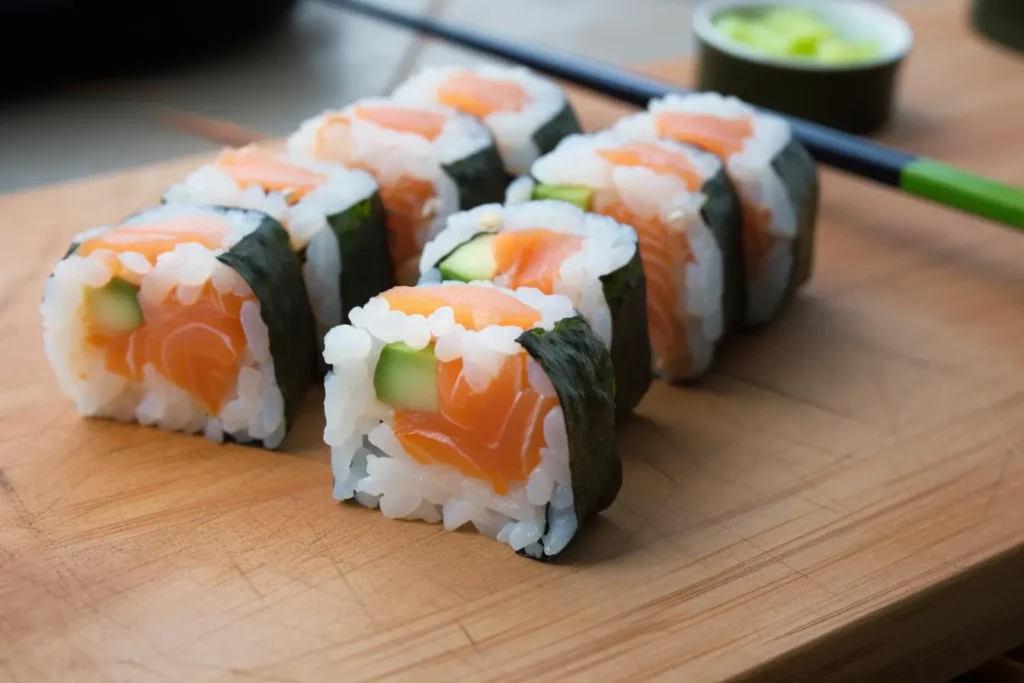
Cut with a very sharp blade and damp knife blade in a single, calm stroke; you avoid squeezing and get clean pieces.
Use even pressure and avoid sawing or moving back and forth so that the filling is not pushed out and the look remains.
Finely sharpened knives with sufficient length make precise cuts easier for you; clean the blade briefly with a damp cloth after each cut to remove sticky residue and ensure consistent results.
The Golden Patience
While you let the rice rest after seasoning, the acidity will be evenly distributed and the grains will settle; Patience ensures that nothing gets mushy later and that the texture holds.
Only by cooling it for a short time can you prevent crushing the grains when forming; work calmly and in a controlled manner so that you achieve the perfect adhesive ratio .
The Wooden Hangiri
The wooden hangiri absorbs excess moisture and prevents condensation, so you keep even grains and no water dilutes the wort.
Make sure that you moisten the wood slightly before use and dry it well afterwards; Beware of standing wetness, otherwise mold will develop.
Fanning for shine
Rapid fanning during blending cools the rice evenly and fixes the shine, giving you shiny grains and better adhesion later.
In addition, you should make sure that you don’t fan too much so that the rice doesn’t dry out; work in calm, steady strokes for the best result.
Culinary sins
Avoid typical mistakes such as inadequate rinsing and incorrect water-to-rice ratio, as such negligence quickly leads to mushy or lumpy rice that compromises your sushi.
In addition, improper handling and too hot steaming reduce the grain structure; you have to pay attention to precise temperature control and gentle work so that the grains shine and don’t break.
The metal ban
Do not use metal utensils when mixing or serving, as metal can mechanically damage the grains and affect the taste; instead, use wood or plastic to avoid damage .
The danger of over-stirring
Don’t stir too long, as excessive stirring will release starch and make the rice excessively sticky ; you should cut and fold instead of stirring vigorously to get the desired consistency.
Note that a few, gentle folding movements combined with air supply through fanning create the ideal texture; you must not press or squeeze the rice.
Perfect Sushi Rice – 5 Easy Steps for the Ideal Sticky Rice Result
Closing remarks
In summary, if you use the five steps exactly, you will achieve an even stickiness and avoid typical mistakes such as overcooking or grains that are too dry. Check the temperature and seasoning as it cools.
Keep hygiene and patience: don’t serve too hot and practice regularly, because precision rewards you with authentic taste.
FAQ
Q: What type of rice is best for sushi?
A: For perfect sushi rice, choose short or medium-grain short grain rice (e.g. japonica varieties). These varieties have a higher starch percentage, which provides the desired stickiness during cooking without becoming mushy. Avoid long-grain or parboiled rice.
Q: How do you wash and soak the rice correctly?
A: Wash the rice several times under cold water until the draining water runs clear to remove excess starch (3-6 washes). Then soak in cold water for 30-60 minutes so that the grains absorb water evenly and do not become soft on the outside and the inside during cooking.
Q: What is the optimal water ratio and cooking method?
A: A common ratio is about 1 part rice to 1-1.1 parts water (volume), depending on the type of rice and pot. Bring the rice to the boil once, then cover and cook over very low heat for 12-15 minutes, then leave to soak without heat for 10-15 minutes. Rice cooker measuring cups and manufacturer’s instructions may vary slightly.
Q: How do you season and mix the rice for sushi properly?
A: For sushi vinegar, gently heat a mixture of rice vinegar, sugar, and salt until the sugar and salt are dissolved. Place the hot rice in a wide bowl (e.g. hangiri), add some vinegar mixture and carefully cut and fan with a rice spatula so that excess moisture escapes and shiny, sticky grains are formed.
Q: How to avoid rice that is too sticky or too dry and how to store it?
A: Too sticky = too much vinegar/sugar or too much pounding; instead, cut gently and use less liquid. Too dry = too little water or too long to cool without covering; cover the rice with a damp cloth to prevent it from drying out. Store at room temperature for a short time and use within one day; not in the fridge as the texture suffers.