You’ll learn how to wash rice thoroughly, stick to the right cooking time, and season with the perfect rice vinegar ratio ; be careful not to leave the rice unrefrigerated for a long time to preserve flavor and safety.
Key Takeaways:
- Use high-quality, short-grain sushi rice; wash thoroughly until the water runs clear and soak for 20-30 minutes before cooking, then steam gently with the right water ratio.
- Season with a mixture of rice vinegar, sugar and salt (dissolve warm and season to taste) – the balance of sweet-sour-salty determines the authentic taste.
- Gently fold in the rice with a cutting motion and let cool with fans until lukewarm and shiny; Always cover with a damp cloth and do not serve hot.
The hunt for the right grain
Look specifically for Japanese round grain, because only the right grain provides the typical stickiness; You can find recommendations in Perfect Sushi Rice – Step by Step Explained – ASIAN FOOD.
Don’t forget that moist storage and fresh grain make all the difference; you should pay attention to the harvest year and origin.
Why cheap goods ruin your effort
Cheap goods lead to crumbly texture and lack of binding; even with perfect seasoning, you can’t conceal anything if the grains fall apart too easily.
The soul of Japanese round grain
Korn from Japan brings the characteristic silvery-shiny surface and elastic structure that you need for authentic sushi taste.
Aromas unfold with proper washing and steaming; you should choose mild, clear rice varieties and not over-polish to preserve nutrients and flavor.
The purification of the soul
When cleaning the rice, gently rinse it in cold water until it remains clear; avoid vigorous rubbing that damages the grains. You can find additional tips on seasoning here: Seasoning sushi rice correctly | Instructions.
Make sure you change clean water and don’t knead the rice for too long, as damaged grains will lose the texture you want.
The ritual washing of starch
Gentle swirling removes excess starch that would otherwise result in sticky rice; you should change the water several times until it stays clear for optimal graininess .
The necessary silence during soaking
While soaking, let the rice rest undisturbed so that the grains absorb water evenly; Patience is crucial for consistency later on.
In addition, you control the soaking time according to the variety and season and avoid stirring, otherwise the surface can roughen up; keep the containers covered and still.
Playing with fire
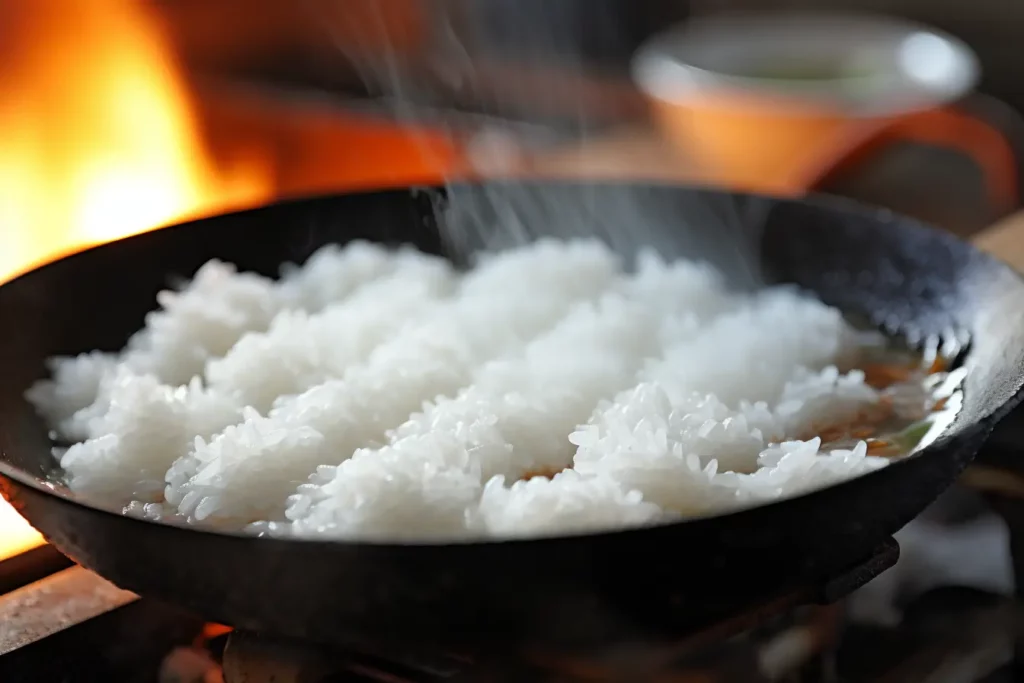
Pay attention to the flame: you want high heat only briefly to boil, then throttle immediately so that the rice doesn’t stay dry on the outside and raw on the inside.
Place the pot centered on the flame and use a thick bottom so that the heat is evenly distributed and you prevent burning around the edges.
Heat control without excuses
After boiling, drastically reduce the heat and keep it constant; this will prevent overcooking and ensure even cooking.
Control the lid and steam circulation: a tight-fitting lid retains moisture, a slight lift regulates temperature fluctuations and allows you to maintain gentle heat .
The sacred time after cooking
Let the rice rest for at least ten minutes after cooking; this resting time stabilizes the structure and helps you connect the vinegar and grains.
Note that you only carefully loosen and fan the rice with a wooden spatula after it has rested so that steam can escape and the consistency becomes fluffy .
Protect the residual heat by covering the pot with a clean cloth; this will prevent condensation on the surface and preserve the aroma.
The Alchemy of the Sushi Zu
Note that when seasoning the rice, you can use a proven basic recipe, such as sushi rice – basic recipe for Japanese glutinous rice to ensure the right grain and moisture; this way you achieve even seasoning and texture.
Make sure to slowly incorporate vinegar, sugar, and salt and treat the rice with a loose cutting motion so that you don’t apply too much pressure and the grains remain intact.
The balance of acidity and sweetness
Make sure you dose the acid so that it lifts the rice starch without dominating; a touch more sugar can round out the acidity, but avoid too much vinegar that destroys the flavor.
Remember that you can make small adjustments: try a sample before seasoning all the rice to achieve the desired harmonious aroma .
The right temperature for seasoning
Keep an eye on temperature and consistency: you should use the seasoning vinegar lukewarm, ideally at around 30-35 °C, because too much heat can damage the grains – not above 40 °C.
Measure the temperature with a thermometer or check with your wrist; heat the wort only enough so that it spreads well, and pour it evenly so that you don’t produce lumpy spots .
Handicrafts at Hangiri
In hangiri, you mix rice and sushi vinegar with a gentle, cutting motion; be careful not to separate the grains and not crush the grains. Use a wooden jar and cutlery so that the heat draws evenly and the rice stays moist but not mushy .
Gentle cutting instead of coarse mud
Avoid coarse stirring; rather, you cut the rice with a scraper in even, flat strokes and lift it carefully. This keeps the grains whole, gives loosely separated grains and avoids sticky lumps.
Force the shine by fanning
By fanning it in a targeted manner, you can quickly cool the rice and fix the vinegar – this creates the characteristic shine. Keep an eye on the temperature so that the rice doesn’t stay too hot and the consistency is stabilized.
When fanning, make sure to use even, rhythmic movements and a slight spacing so that the surface shines but the rice does not dry out; not drying out is crucial, as is an even feeder for the look.
Sins of the amateurs
Most of the time, you underestimate how much incorrect washing, a bad water ratio or rough stirring destroys the aroma. Too much water or insufficient washing out will result in mushy rice and rob the dish of its fine sweetness.
The timing of seasoning is also crucial: if you season too hot, the vinegar note evaporates, too cold it does not combine properly. Make sure to cool evenly and fold gently so that the granules remain shiny and fluffy.
Why the refrigerator is a graveyard
Refrigerating removes moisture from the rice and destroys the texture, losing flavor and bite. You lose the fine aroma balance that characterizes freshly prepared sushi rice.
In addition, condensation promotes drying when cooled; avoid refrigerating hot rice immediately. It’s better to keep the rice covered for a short time at room temperature to preserve the aroma.
The betrayal of too much pressure
Too much pressure during shaping will squeeze the grains together, and you’ll end up with a dense, rubbery mass instead of a slight graininess. Overpressing is one of the most common causes of tasteless sushi.
After all, excessive force not only ruins the texture but also takes away the airiness of the rice; the mouthfeel becomes shallow and unpleasant. Therefore, practice gentle, precise handling.
That’s why you shape nigiri with wet hands and minimal pressure, control the moisture with a vinegar-water spray and move the hand briefly and firmly so that the surface remains shiny and the internal structure loose.
Aromatic sushi rice – step-by-step to authentic taste
Result
Finally, you should carefully check the balance of rice vinegar, sugar and salt to achieve the authentic taste and ensure a perfect consistency.
Be sure to be aware of the risk of Bacillus cereus: cool leftovers quickly and avoid long storage at room temperature to preserve flavor and safety.
FAQ
Q: Which rice is best for flavorful, authentic sushi rice?
A: For authentic sushi rice, use high-quality Japanese short-grain rice (also called sushi rice or japonica). It has a higher starch content, sticks well and absorbs wort evenly. Make sure to use fresh packaging (if possible within a year after harvest), avoid parboiled or long-grain varieties. Varieties with natural sweetness are also suitable for flavouring; for additional umami notes, a thin piece of kombu (seaweed) can be added when soaking.
Q: How do I wash and soak the rice properly to get the best texture?
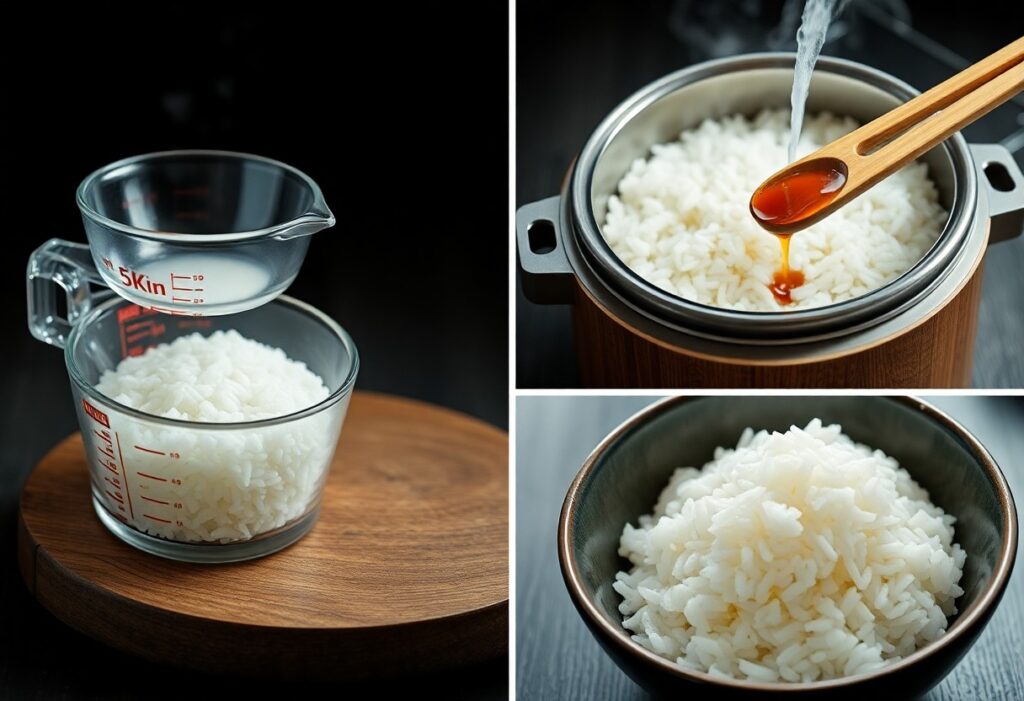
A: Step 1: Measure (e.g. 2 cups of short grain rice = approx. 360 g). Step 2: Put the rice in a large bowl, cover with cold water and stir gently with your hand, then drain the water. Step 3: Repeat the process 4-6 times until the water is almost clear (slightly milky is normal). Step 4: Soak rice at room temperature for 30-45 minutes (45-60 minutes in cold weather) so that the grains absorb water evenly. Optional: Add a thin piece of kombu while soaking and remove before cooking to add umami.
Q: What is the best water ratio and cooking method (pot vs. rice cooker)?
A: Ratio: For Japanese short grain rice, roughly 1:1.1-1.2 (rice:water, by weight) is recommended; usually 1 cup of rice to 1-1.1 cups of water by volume. In the pot: After soaking, measure out water, bring rice to a boil over medium heat, then immediately reduce to very low heat and leave to infuse for 12-15 minutes, do not open. Then let stand for 10 minutes without heat (cover on). In the rice cooker: After soaking, simply use the indicated amount of water; many rice cookers provide more consistent results. If necessary, remove the kombu before cooking if you have used it.
Q: How do I prepare the sushi vinegar (sushi-su) and what ingredients provide the aromatic, authentic profile?
A: Classic base: rice vinegar, sugar, salt. Basic ratio per 360 g of uncooked rice (approx. 4-5 cups of cooked rice): 120 ml rice vinegar, 3-4 tbsp sugar, 1-2 tsp salt. Preparation: Gently heat vinegar, sugar and salt in a small saucepan, only until sugar and salt are completely dissolved (do not boil strongly), then let cool. For additional flavor layers: 1) Let a piece of kombu (2-3 cm) steep in vinegar or heat briefly for umami; 2) Add 1-2 tablespoons of mirin or sake for a sweet, aromatic profile; 3) A few drops of yuzu or lime juice for freshness. Try the mixture and adjust sugar/salt, it should be balanced, slightly sweet and sour and not overpowering.
Q: How do I mix, refrigerate, and store the sushi rice to keep it flavorful, shiny, and usable all day?
A: Step 1 (Mixing): Immediately add cooked rice to a wide bowl or hangiri. Drizzle the sushi-su evenly over the rice. Mix with a wooden spatula in cutting, folding motions (do not stir) to separate grains and create texture. Step 2 (Cooling): During mixing, fan with a fan or fan to evaporate excess moisture and create shine. Bring rice to body temperature – lukewarm is ideal. Step 3 (Storage): Use on the same day for best quality. Cover with a damp cloth for a short time (a few hours) and store at room temperature; do not put it in the refrigerator, otherwise it will harden. To warm up briefly, gently steam or moisten with a little hot water and steam, do not microwave-dried.