
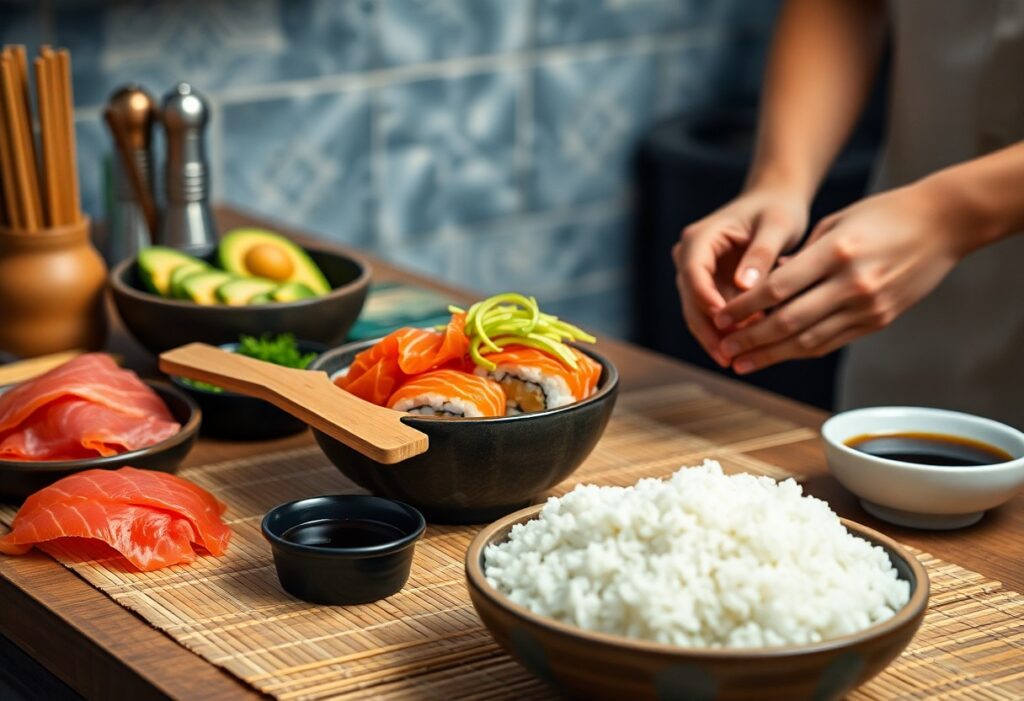
You will learn step by step how to prepare sushi safely with fresh fish and clean handling ; pay special attention to raw fish hygiene (danger), proper rice seasoning and technique so that the result is delicious and easy .
Key findings:
- Perfectly prepared sushi rice (properly washed, cooked and seasoned with sushi vinegar) forms the basis.
- Basic tools and techniques (sushi mat, sharp knife, even rolling and cutting) can be learned quickly with practice.
- Fresh ingredients and consistent hygiene are crucial; start with simple fillings and then vary creatively.
The Kitchen Battlefield
First, set up the work surface so that it is clean, dry and free of clutter; this reduces accidents and improves the process.
Then make sure you have non-slip surfaces and good light, because visibility and stability are crucial to avoid cuts .
Choosing a sharp blade
Choose a sharp, long knife, ideally suitable for sushi, so that you achieve smooth slices; blunt blades increase the risk when cutting.
Make sure you regularly care for and dry the blade and handle; regular sharpening improves precision and safety.
The bamboo mat ritual
Place the mat on a clean surface and wrap it with plastic wrap to ensure hygiene and prevent rice from sticking to the mat.
When rolling, adjust the pressure evenly: if you roll too loosely, the rolls will become misshapen, and if you press too hard, the filling can be crushed.
Use gentle, steady movements as you curl up, and use your fingers to control the shape; by evenly tensioning you get even, professional wheels.
The Gospel of Rice
Furthermore, you should know that properly cooked sushi rice is the backbone of your rolls; it combines texture and flavor and carries fillings. You need to treat the grains so that they become sticky without being mushy.
In addition, the result depends on your choice: use short short grain rice and make sure that the grain is even and fresh storage so that you prepare safe and tasty sushi.
Rinsing away the sins
First, rinse the rice until the water is almost clear; this removes excess starch and prevents a rubbery result. Be careful not to rub too hard so as not to break the grains.
Then let the rice rest for a short time so that it absorbs moisture evenly; this ensures a stable structure during molding and reduces the risk of the rolls falling apart.
The Vinegar Bump
The right ratio of rice vinegar, sugar and salt is important: too much vinegar is covered, too little makes boring rice. Heat the mixture until the sugar and salt are dissolved and gently mix it into the hot rice.
Tip: Adjust the vinegar mixture to your taste preferences, cool the rice quickly and fold it gently so that the grains shine and no liquid escapes. Make sure to use moderate seasoning instead of overloading.
Obtaining the loot
When purchasing, you concentrate on retailers who deliver sashimi quality and document the cold chain seamlessly. Ask about the date of capture, origin and whether the fillet has been prepared for raw consumption, because improper storage increases the risk of parasites and bacteria.
The connection to the fishmonger
Trust your fishmonger when he talks openly about processing and hygiene ; build this relationship and insist on transparent disclosures. Have fish freshly carved and, if possible, shown to you by certified suppliers to ensure reliable quality .
Recognizing real freshness
Check the eyes (clear, not cloudy), gills (bright red), and texture; a strong fishy smell is a warning sign, while firm flesh and shiny skin are positive. You shouldn’t feel any giving way when you press it.
Pay attention to temperature during transport and carefully open the package to check the smell and structure; if unsure, demand proof of freezing treatment for parasite removal and avoid products without clear proof of origin, as they can be hazardous to health .
The Art of the Roll
Start with a thin layer of rice on top of the nori and spread it evenly, leaving a clean edge; for techniques and fine-tuning see Make sushi yourself – 5 tips from the sushi master for deepening.
Make sure you don’t use too much filling when rolling, because rolling too full will result in uneven cuts and can tear the nori; practice until the form is stable.
The Maki Foundation
Shape the rice flat with wet fingers, leaving about 1 cm of edge so that the mat stays clean and closes the roll.
Spread the filling centrally and in rows so that you get even slices later and avoid overfilling .
The Firm Compression
Squeeze the mat evenly and with controlled pressure; firm pressure stabilizes the roll, but avoid crushing, which destroys the texture.
It is important that you let the roll rest briefly before cutting, so that the structure settles and you get clean, professional slices.
Inside-Out Technique
Inside, you turn the classic principle around: rice on the outside, nori on the inside, so that the roll on the outside becomes more attractive; use make sushi yourself – this is how it works recipe as a practical guide for rice and nori ratios.
Use a damp bamboo mat and well-cooked, slightly sticky rice, roll tightly, and remember that raw fish should only be used if it is of very fresh quality to minimize risk.
Uramaki Construction
When building the uramaki, spread the rice thinly on the nori, place the filling centrally and roll evenly; Uniform pressure ensures clean discs and a stable structure.
Texture and Contrast
You can achieve texture by combining crunchy elements such as tempura or cucumber with creamy avocado; so you create a balanced mouthfeel in every roll.
You can also use contrasts with sauces and toppings: a hint of spicy mayo, roasted sesame seeds or spring onions enhances aromas and creates visual and taste tension.
The final presentation
When serving, make sure that colors and textures harmonize; place nigiri with a slight angle and maki neatly next to each other. You should emphasize fresh ingredients and not leave raw fish pieces open for long because temperature and hygiene are critical.
After that, serve in small portions to keep everything cold and fresh ; serve soy sauce, pickled ginger and wasabi separately so that your guests can dose themselves. In this way, you present respect for taste and safety.
Precise cutting
Your knife must be sharp; cut in one clean stroke without sawing, keep the blade slightly tilted and moisten it if necessary. While a sharp knife is more effective, it also comes with the risk of injury – work with concentration.
Serving with honor
Sidedressing is an opportunity to show style: work with distance and symmetry, use contrasts and clean lines to make each piece stand out. You thus honor ingredients and craft.
In addition, briefly inform your guests about etiquette: dip nigiri with the fish side briefly in soy sauce and do not season rice directly; avoid excessive soaking and respect traditional sequences to preserve taste and respect for tradition .
Make your own sushi – delicious, learning-friendly steps for hobby cooks
You will learn to prepare high-quality sushi yourself: washing rice properly, dosing sushi vinegar, filling nori and forming rolls. Follow clear techniques, pay attention to fresh ingredients and hygiene, and practice cutting. For step-by-step instructions and recipes, check out Make your own sushi – delicious Japanese sushi recipes.

FAQ
Q: What basic ingredients and tools do I need to start making sushi at home?
A: Basic ingredients: high-quality short-grain sushi rice, rice vinegar, sugar, salt, nori sheets, fresh sushi-grade fish or safe alternatives (smoked salmon, cooked shrimp), fresh vegetables (cucumber, avocado), soy sauce, wasabi and pickled ginger. Tools: Rice cooker or pot with tight-fitting lid, hangiri or large non-reactive bowl, wooden or plastic spatula for mixing the rice, bamboo mat (makisu) plus cling film, very sharp filleting knife, damp cloths, measuring cup and kitchen scale. Cleanliness and a sharp knife are crucial.
Q: How do I properly cook and season sushi rice so that it becomes sticky, shiny, and flavorful?
A: Prepare the rice: Wash the rice thoroughly until the water runs clear, then soak for 20-30 minutes. Cooking ratio depending on the type of rice ~1:1-1.1 water to rice (by weight). After cooking, let it rest for 10-15 minutes. Prepare sushi-zu (seasoning vinegar): Heat rice vinegar with sugar and salt until sugar and salt dissolve. Sample amount for 300 g of raw rice: 60-80 ml of rice vinegar, 30-40 g of sugar, 8-10 g of salt. Place the rice in a shallow bowl, work in the seasoning mixture evenly, making cutting movements with a wooden spatula and cooling the rice with a fan or cloth at the same time to create a shine. Do not crush; Goal: sticky, separated grains at room temperature.
Q: What are the techniques for maki, nigiri and temaki and what tips ensure a good result?
A: Maki: Place nori with the matte side up, spread a thin layer of rice and leave about 2 cm free at the top, place the filling at the bottom third, roll up tightly with makisu and shape; cut with a damp, very sharp knife. Nigiri: form small rice balls (about the size of a walnut) with moistened hands, shape into elongated pieces with light pressure, place a topping with a little wasabi in between and press down gently. Temaki: Cut the nori into quarters, place the rice and filling diagonally at one corner and roll into a bag. Tips: do not use too much rice, moisten your hands regularly, apply pressure, make the cut with a single calm movement, use cling film and bamboo mat for inside-outside rolls (uramaki).
Q: How do I choose and handle fish safely for sushi at home, especially in terms of freshness and hygiene?
A: Fish: Buy only from trusted retailers and choose fish labeled as “sushi quality” or “fit for raw consumption”. Many suppliers freeze fish to -20 °C for at least 24-48 hours to reduce parasites; check dealer details and local regulations. Storage: always refrigerated at close to 0-2 °C, prepare on the day of consumption. Hygiene: clean work surfaces, separate cutting boards for raw fish, frequent hand washing. Cutting: very sharp knife, thin, smooth cuts. Safe alternatives: cooked or smoked fish, pickled seafood or vegetarian fillings.
Q: What common mistakes do beginners avoid and how can I improve taste and presentation?
A: Common mistakes: too much rice on the nori, rice that is too wet or too dry, overcrowded rollers, blunt knives, too much pressure when shaping, nori becomes moist and soft before rolling. Improvements: Bring the rice to room temperature, reduce the amount of filling, wipe a sharp knife with a damp cloth between cuts, cut ingredients into even strips, combine textures and flavors (crunchy, creamy, sour, salty), accentuate with sesame seeds, spring onions or fine sauces, and arrange attractively on a cool plate. Practice makes all the difference: start slowly, perfect individual techniques and then try out more complex combinations.