
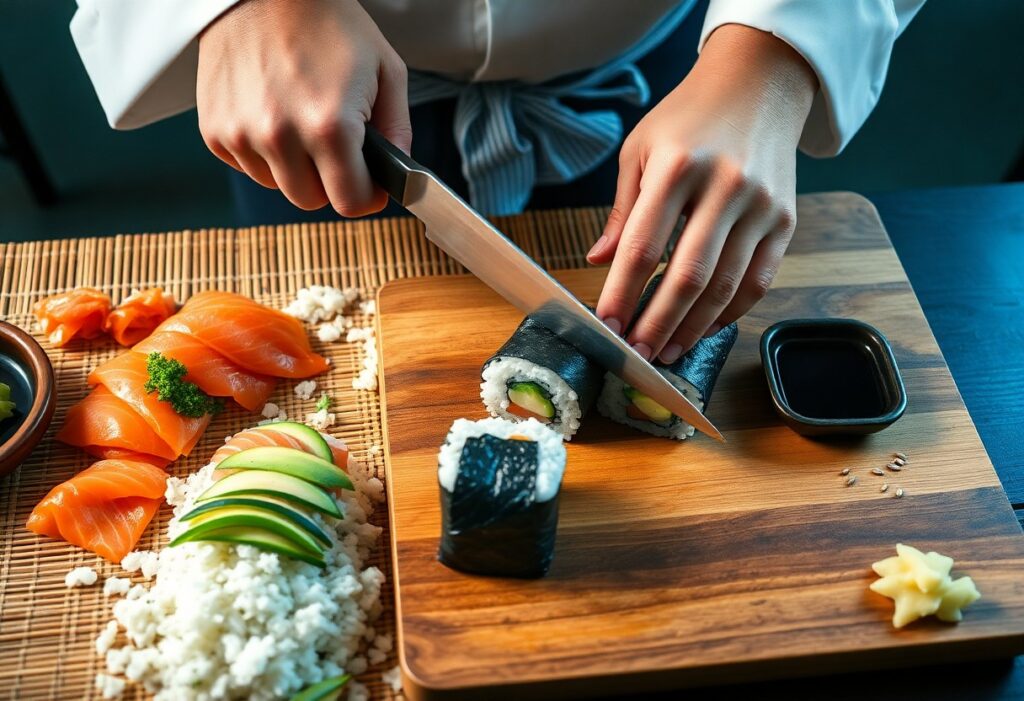
You’ll learn how to make authentic sushi with fresh ingredients and simple steps ; pay special attention to fish quality and hygiene to avoid health risks.
Key Takeaways:
- Fresh ingredients are crucial: sushi-friendly fish, fresh vegetables and well-washed rice ensure taste and safety.
- Clear, simple steps: cook rice properly and season with sushi vinegar, arrange nori and filling, roll with makisu, and cut clean.
- Authentic taste through technique and seasoning: correct vinegar-sugar-salt mix in the rice, sharp knife, suitable side dishes such as soy sauce, wasabi and gari.
The foundation of rice
Rice Variety & Preparation
Choose short or short grain rice, wash it until the water runs clear and cook it in the right proportion. After steaming, gently mix it with seasoned rice vinegar to give it a shiny, sticky, but grainy texture .
Seasoning & Safety
Make sure to fan the rice as it cools and only process it lukewarm; do not leave it at room temperature for more than two hours to avoid health risks, and keep it covered until use.
The cold and the steel
Keeping the cold
When handling raw fish and ice cream, you strictly control the temperature; Cold preserves freshness and inhibits bacteria, but incorrect storage is dangerous, so document times and maintain cold chains.
Safe cut
Pay attention to the very sharp blade, which improves precise cuts, texture and appearance; however, you need to exercise caution and use safe cutting techniques.
The craft of rolling
Correct technique
When rolling, you should keep the nori sheet loose but firm and spread the rice thinly; too much filling leads to cracks. Roll with even pressure, so the shape remains stable and you achieve clean cuts.
Subtleties & Safety
Make sure you have a sharp knife and a damp blade so that the cut doesn’t tear; Be careful when cutting prevents injuries. This is how you achieve authentic taste and aesthetic pieces.
Make your own sushi – fresh, easy steps for authentic taste
You can achieve authentic flavor when you use fresh fish, high-quality rice, and properly seasoned sushi vinegar. Cook the rice exactly, fan it out and roll it clean with nori and a sharp knife. Pay attention to hygiene, temperature and precise cuts. For practical instructions, use Make your own sushi – here’s how to make a recipe.
FAQ
Q: What ingredients do I need to make sushi fresh and authentic?
A: For classic sushi enjoyment, you will need sushi rice (short-grain), rice vinegar, sugar, salt, fresh nori seaweed sheet, fresh sashimi-quality fish (salmon, tuna) or vegetables (avocado, cucumber), sushi roll mat (bamboo makisu), sharp knife, soy sauce, wasabi, and pickled ginger. Buy fish only from trusted dealers as “sashimi or sushi quality” and choose seasonal, fresh vegetables. Optional: sesame seeds, cream cheese or tempur-fried ingredients for variations.
Q: How to properly prepare sushi rice (ratio, washing, seasoning)?
A: Rice: 1 part rice to 1-1.1 parts water. Wash the rice thoroughly under cold water until the water runs clear, then soak for 30 minutes. For rice, cook: bring to a boil, reduce heat and simmer for 10-12 minutes, then rest covered for 10-15 minutes. For sushi vinegar, mix: 5 tbsp rice vinegar, 2 tbsp sugar, 1 tsp salt per 300g uncooked rice (adjust quantity). Heat vinegar until sugar/salt is dissolved, do not boil. Place the rice in a shallow dish, fold in the vinegar evenly and cool with a fan to keep the rice shiny and sticky. Rice should be used lukewarm for rolling.
Q: How do I roll and cut sushi properly so that it doesn’t fall apart?
A: Place a nori plate glossy side down on the bamboo mat, spread a thin, even layer of rice (about 0.5-1 cm) over 2/3 of the nori area, leaving the edge free at the top. In a line, fill ingredients in the middle. Roller blind: lift the lower end of the nori, roll up the filling firmly and evenly with the mat, shaping with light pressure. Pull back the mat and seal the roll with a slightly damp edge of your hand. Cutting: use a sharp, damp knife, wipe the blade between cuts, cut the roll into 6-8 pieces. Too much rice, too little pressure or dry blade will lead to rolls falling apart.
Q: Is it safe to use raw fish at home, and how do I store it properly?
A: Buy raw fish only as “sashimi quality”; ask the dealer for stock and catch dates. For added safety, you can freeze fish at -20°C for at least 24 hours (or longer depending on the type of fish) to kill parasites; observe legal recommendations. Store fish in the refrigerator at 0-2 °C and use within 24 hours. Work with clean utensils, maintain hygiene and cut fish just before serving to guarantee freshness.
Q: What are some common mistakes when making your own sushi and how do I avoid them?
A: Common mistakes: Rice too moist or too dry (let it soak in and dose vinegar correctly), rice layer that is too thick (less rice, spread thinly), nori becomes soft (moisten/use just before rolling), fuzzy knife (sharpen regularly and moisten before each cut), overfilling (use fewer ingredients), poor hygiene of raw fish (only sashimi quality, proper refrigeration). Tip: Practice, simple maki rolls first, then more complicated inside-out or nigiri variations; controlled portions and a clean work surface lead to consistently good results.