You’ll learn how to make perfect, shiny sushi rice in eight clear steps; pay special attention to proper hygiene, as improper storage can cause food poisoning (Bacillus cereus).
Key Takeaways:
- Selection & Preparation: High-quality short- to medium-grain sushi rice; wash thoroughly and soak for 30-60 minutes for even graininess.
- Cooking & seasoning: Observe the exact water ratio and gentle steaming; incorporate warm sushi vinegar (rice vinegar, sugar, salt) and fan the rice as it cools for shine and texture.
- Handling & Serving: Use rice at body to room temperature, keep moist and shape immediately – do not store cold to preserve authentic flavor and texture.
The origin of the rice grain
Variety selection
Do you prefer short-grain Japonica varieties; their sticky texture and fine grain are crucial for authentic sushi rice. You pay attention to fresh sections and gentle polishing so that the grains retain their shine during seasoning and the consistency is right.
Cultivation and risks
Pay attention to origin and cultivation methods: Rice from contaminated soils can contain arsenic , a serious threat to quality. Instead, choose controlled, ideally certified organic batches and store in a cool place to guarantee consistent taste and safety.
The ritual of washing
Gentle rinsing
Gentle rinsing removes excess starch but avoids vigorous rubbing that damages grains. Rinse in cold water and repeat until the water is almost clear.
Water clarity
Make sure that the water becomes clear ; cloudy water makes the rice sticky. After rinsing, you can soak the rice briefly to create an even texture.
Sushi rice from a master hand – 8 steps for authentic enjoyment
The precision of heat
Keep the heat at a constant, medium heat while cooking so that the grains swell evenly. If you heat too high, there is a risk of burning and uneven texture; Temperature control is crucial.
Make sure to reduce the flame immediately after boiling and seal the pot well; this keeps the steam even and the rice becomes sticky without becoming mushy. Patience pays off.
The Alchemy of Seasoning
Vinegar mixture
Precision is key: mix rice vinegar, sugar and salt to the exact amount so that the rice is shiny and not too sweet. Look at How do I make the perfect sushi rice at home? the video .
Temperature & Handling
Fine-tuning the temperature is important: you add the seasoning to lukewarm rice and stir gently so that the rice grains retain their structure; do not press the rice.
The cooling breath
Fan and humidity
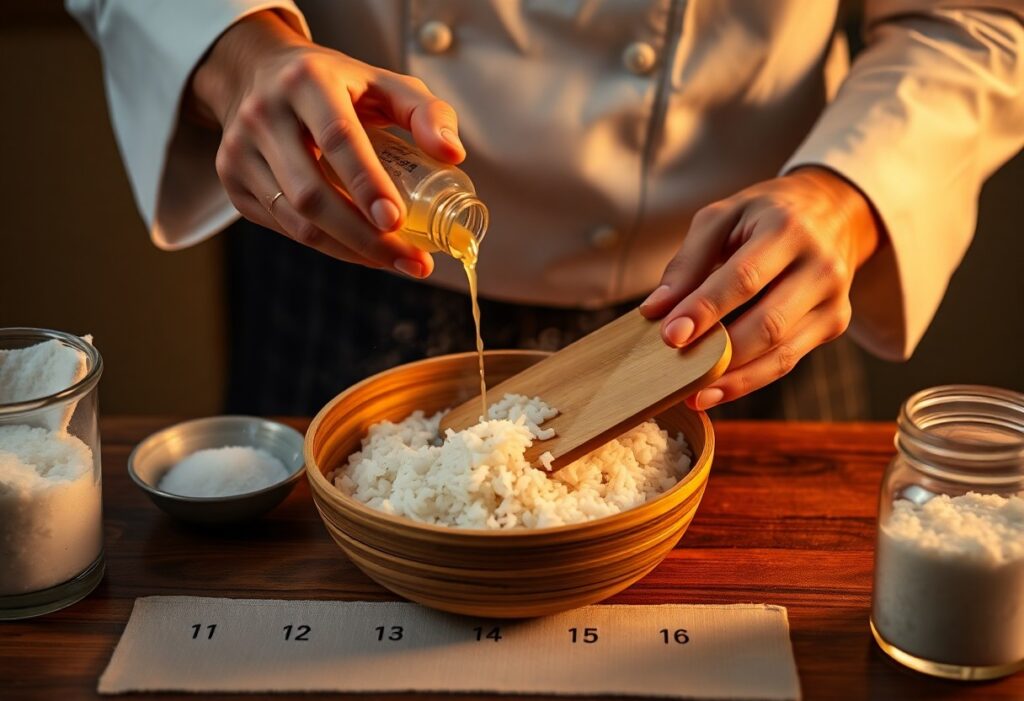
When carefully fanning with a wooden spatula, you ensure that excess heat escapes and the rice remains evenly sticky ; avoid direct drafts that cause it to dry out .
Target temperature and handling
Make sure the rice stays lukewarm-not cold-so you get the perfect texture ; don’t press too hard, or you’ll destroy the graininess.
The final texture
Fine-tuning
Check that the rice is shiny and grainy : it should stick so that you can shape it, but not be mushy . Air and let excess steam escape without crushing the grains.
Be sure to bring in the seasoning evenly and fan the rice as it cools; gently cutting instead of stirring preserves the structure. You can find more techniques in Seasoning Sushi Rice | Instructions.
Sushi rice from a master hand – 8 steps for authentic enjoyment
You master eight precise steps: wash the rice thoroughly, cook in the correct water-rice ratio, steam, mix in sushi vinegar exactly, fan carefully, let cool lukewarm, portion correctly and use immediately. Pay attention to grain, temperature, and timing to achieve authentic texture and shine. For advanced techniques and pro tips, see Sushi Preparation Tips from the Pro: How to Roll Perfect …
FAQ
Q: Which type of rice is best suited for “Sushi Rice From Master Hand – 8 Steps For Authentic Enjoyment”?
A: Use high-quality Japanese short-grain rice (e.g., koshihikari). Short grain rice has the right starch and moisture structure for the sticky but grainy texture targeted in the 8 steps. Pay attention to fresh packages and, if possible, Japanese origin or certified sushi rice varieties.
Q: How important are washing and soaking in the 8 steps and how are they done correctly?
A: Washing and soaking are crucial: put the rice in a bowl, stir vigorously with cold water, and drain the milky water several times until it runs clear (3-6 times). Then soak the rice in fresh water for 30-60 minutes so that the grains absorb water evenly and later cook evenly. These steps prevent overcooked grains and provide the typical texture.
Q: What water ratio and cooking method does the recipe recommend for the best results?
A: The standard ratio is about 1 part rice to 1-1.1 parts water (by volume), depending on the rice and age. Use a rice cooker for consistent results or a saucepan with a tight-fitting lid: boil over high heat, then immediately reduce to very low heat and cook for 10-12 minutes, followed by 10-15 minutes of non-heat steaming. This method guarantees even cooking, which is part of the 8 steps.
Q: How is the classic sushi vinegar mix (sushi-to) prepared and how do you properly incorporate it into the rice?
A: Sushi-zu consists of rice vinegar, sugar and salt (favorable starting ratio: 5 tbsp vinegar, 2 tbsp sugar, 1 tsp salt per 500 g uncooked rice, adjust to taste). Dissolve the sugar and salt in warm vinegar, leave to cool. Place the hot, freshly steamed rice in a shallow wooden vat (hangiri) or large bowl, drizzle the vinegar mixture evenly over the top and gently fold in with a wooden spatula in cutting motions, fanning air with fans to maintain shine and cool the rice quickly.
Q: How do I refrigerate, store and process the sushi rice after the 8 steps to maintain optimal freshness and consistency?
A: Allow rice to cool briefly at room temperature (not in the refrigerator) until lukewarm; It should be sticky, but not wet. Use within 4-6 hours for best quality. For later use, cover loosely with a damp cloth to prevent it from drying out. Leftovers can be briefly steamed or refreshed in the rice cooker, but the texture deteriorates with each storage; fresh rice provides the most authentic enjoyment according to the 8 steps.