You will learn in six steps how to achieve perfect stickiness through the right rice-water ratio, gentle washing and steaming cooking; however, pay urgent attention to freshness in raw fish – read more: How to make sushi yourself: The secrets of the perfect roll.
Key findings:
- Wash the rice thoroughly under cold water until the water runs clear and soak for 30-60 minutes for even stickiness.
- Accurate water-to-rice ratio and proper cooking/resting times (e.g., 1:1-1,1:1 and resting for 10-15 minutes) ensure tender, sticky rice.
- Gently fold in the sushi vinegar and gently cool the rice with a fan to preserve the shine and texture.
The hunt for the right grain
Look for short, round grains with a glossy surface, as this is the only way to achieve the typical stickiness that holds sushi together and yet remains fluffy.
When shopping, pay attention to variety designations and indications of origin; a clear indication of the variety and year of harvest is often a reliable indication of consistent quality.
Japanese round grain fanaticism
Japanese varieties such as Koshihikari or Sasanishiki offer you an even distribution of starch, which you appreciate for perfectly malleable rice.
Many purists insist on certain regions and rice divisions because there the grains are polished even finer and ground more gently, which strengthens the texture.
Why cheap rice offends the soul
Avoid heavily discounted rice: it often contains a high proportion of broken grains, which destroy your consistency and stick unevenly.
Cheap rice often suffers from a lack of storage and post-treatment, which means that aroma and texture are lost and your sushi tastes flat.
In addition, it is worth paying attention to test marks and organic seals so that you avoid residues and poor workmanship; this ensures sustainable quality and genuine taste.
The washing of impurities
Before adding the rice to the water, remove any visible impurities and do not put any force into grating the grains, as rubbing too hard can damage the grains and destroy the desired texture.
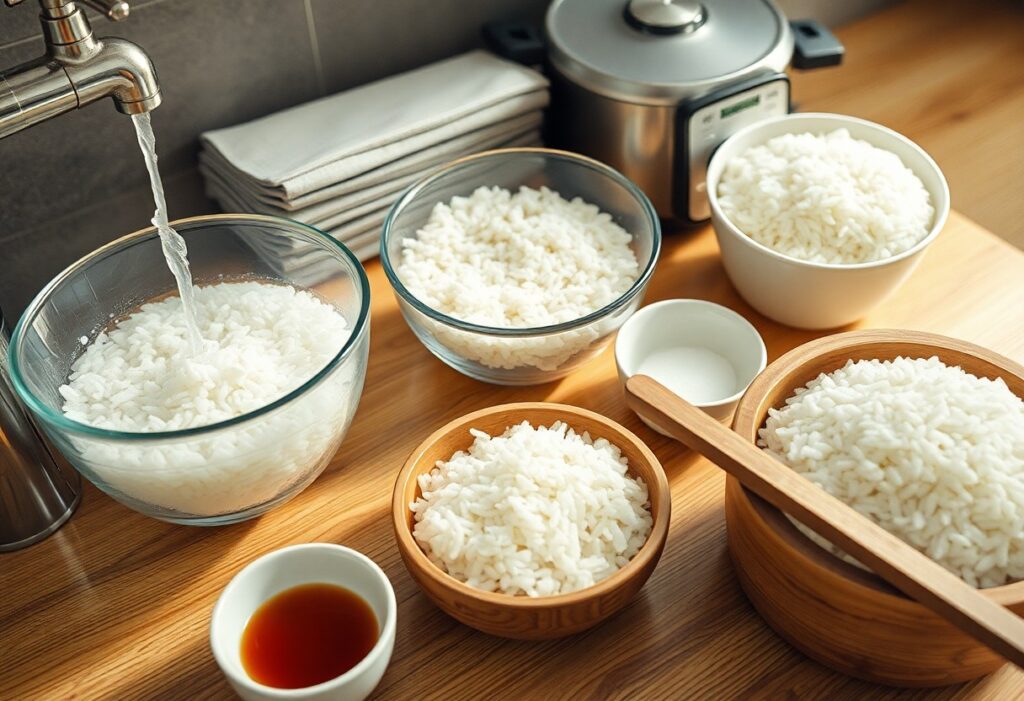
Then rinse with cold water in several passes until coarse cloudiness disappears; this will reduce surface dust and start the basis for evenly sticky rice.
The water must flow clearly
Make sure to change the water several times and wash in gentle circular motions until the drain water is much clearer, as this is the only way to remove the excess starch.
Check clarity before soaking; clear liquid signals that the rice is ready and will combine optimally later without becoming mushy.
Farewell to superfluous strength
Rinse the rice until the cloudiness is greatly reduced; this will remove excess starch that can otherwise lead to sticky lumps when steaming.
Be careful not to wash excessively: some light residue is useful, because too much washing removes the necessary binding from the rice and prevents the desired delicate stickiness; three to five clear passes are usually sufficient.
The discipline of heat
Controlling the heat determines the texture: bring the water to a strong boil, then immediately reduce to low flame and keep the temperature constant; if you’re looking for precise step-by-step instructions, follow the sushi rice cooking guide | Takori.
Consistency is important: you don’t allow a strong boiling transfer, don’t stir during cooking and avoid too high heat, otherwise the rice will be uneven.
The law of the exact amount of water
Precise measurement of the amount of water determines the stickiness; you use scales or measuring cups and note the ratio for your type of rice. Too much water makes you mushy, too little results in hard grains.
Measuring before and after washing will help you: you soak the rice briefly, measure the drained volume and adjust the amount of water accordingly to achieve consistent results.
The sacred rest period after cooking
Rest after cooking completes the structure; you let the pot stand covered for 10-15 minutes and do not open the lid during this time.
Wait patiently while the steam finishes cooking the grain and the starch settles; if you open too early, you risk uneven texture and moisture loss.
You can also optimise the phase by gently loosening and airing the rice with a wooden spatula after resting to create ideal texture and shine.
The Alchemy of Sushi Vinegar
The following determines the texture: the vinegar penetrates the grains and affects the stickiness and shine; you ensure an even distribution while the rice is still warm. Be careful not to leave the rice unrefrigerated for a long time to minimize bacterial risks.
The temperature is crucial: the mixture of rice vinegar, sugar and salt is easier to incorporate if you put it lukewarm but don’t boil it so that the flavors are preserved.
Acidity and sugar in perfect balance
You can precisely adjust the ratio according to taste; typical guidelines are helpful, but you’ll adjust sugar and salt until you get a tart-sweet balance that invigorates the rice without dominating.
In addition, you will completely dissolve the sugar in the vinegar solution by heating it briefly; Do not boil or the mixture will lose the freshness and subtlety you need for perfect sushi rice.
Gentle underlaying without destruction
Gently fold in the vinegar solution with a wooden spatula, making cutting, folding movements instead of stirring or pounding; this keeps the grains intact and the texture preserved.
Furthermore, you work in portions and fan the rice as you fold in so that excess moisture evaporates and the grains remain shiny without sticking.
Finally, hold the hangiri slightly tilted, lift with your wrist and avoid pressure on the grains; do not press or tamp and instant fanning ensures the right consistency and quick cooling.
The way to the perfect texture
First, check the consistency after steaming: the rice should be fluffy, yet slightly sticky . You loosen the grains with a rice spoon and let steam escape briefly so that excess moisture disappears. This is how you lay the foundation for the typical texture.
Then spread the rice evenly in a shallow bowl and gently blow it while you incorporate vinegar solution. By gently mixing, the grains retain their shape and retain moisture without muddying; the result is a balanced, malleable structure.
Fast cooling for shine
Then cool the rice quickly with a fan or fan so that the surface takes on a shine and the vinegar sauce is better absorbed. Rapid cooling prevents excessive evaporation and preserves the shine that sushi demands.
The right temperature for manual work
When shaping, pay attention to the temperature of your hands: they should be warm, but not hot (such as body temperature) so that the grains do not disintegrate or clump too much. With your hands at the right temperature, you can control the pressure and shape precisely.
It is important that you moisten your hands regularly with a vinegar-water solution and do not work on the rice for too long; this reduces sticking and excessive compression. Avoid vigorous kneading, as this will destroy the delicate texture.
Sins in the rice kitchen
Avoid the temptation to improvise when cooking: if you misjudge the water ratio or the heat, your rice risks its structure and becomes unusable for sushi. You need to measure precisely and respect the cooking time to achieve the desired stickiness.
Note that stirring too hard and opening the lid prematurely will also destroy the grains; gentle treatment and a subsequent resting period are crucial for the rice to develop its optimal binding.
The Tragedy of the Overcooked Mud
If you cook the rice for too long, the starch will dissolve excessively and the rice will turn into overcooked mud that can hardly be formed into rolls. You will hardly be able to save anything if the grains fall apart.
Instead, you should immediately reduce the heat at the first boil and let it simmer gently; check the ratio and finish cooking in time so that the grains retain their elastic adhesive force .
Cold hearts and hard grains
Cold hearts occur when you cool rice incorrectly or put it in the fridge too quickly; Undercooking results in hard, unformed grains that break when rolled. You can tell by the firm, glossless texture.
After seasoning, let the rice cool briefly at room temperature and use the steam method when heating so that the grains become supple again; this prevents them from drying out without ruining the structure.
Make sure that you ideally do not store rice for sushi refrigerated for a long time: if you do store it, increase the steaming time a little when reusing it and add minimal water to restore the stickiness .
Tender Sushi Rice – 6 Easy Steps to Optimal Stickiness
Result
Finally, you rely on the method: correct washing, precise rice-to-water ratio and the right steaming time ensure optimal stickiness. You should avoid the risk of scalding when cooling and sticking too much to each other by loosely dividing rice and tempering it with vinegar.
Furthermore, you control the temperature and resting time, because this is the only way to achieve the desired texture and the professional result that keeps your wheels stable.
FAQ
Q: What type of rice is ideal for tender sushi rice?
A: Use short to medium-grain Japanese sushi/koshihikari rice or special sushi rice. These varieties contain more starch and achieve the desired sticky but tender consistency. Avoid long-grain rice, such as basmati or jasmine, as they remain dry and grainy.
Q: What are the 6 simple steps to optimal stickiness?
A: 1) Measure: Weigh rice with an even unit of measurement such as cups or grams. 2) Washing: Rinse several times with cold water and rub until the water is largely clear (2-4 minutes). 3) Soaking: Soak in fresh water for 20-30 minutes so that the grains absorb water. 4) Cooking: Bring to the boil with the right water ratio, then cook over low heat with the lid closed. 5) Resting/steaming: After switching off, cover and leave for 10-15 minutes without lifting the lid. 6) Season & Cool: Gently fold in with prepared sushi vinegar mixture and fan with a rice spoon until lukewarm.
Q: What water ratio and cooking time should I use?
A: As a starting point, use 1 part rice to about 1-1.1 parts water (volume); for short-grain rice, often 1:1 to 1:1.1. In the rice cooker follow the markings, in the pot: bring water to a boil, then immediately reduce to very low heat and simmer for 10-12 minutes. Then let it rest for 10-15 minutes without heat. Adjust slightly if necessary: more water for softer, less for firmer-sticky grains.
Q: How do I fix problems such as rice that has become too sticky or too dry?
A: Too sticky/mushy: Next time, slightly reduce the amount of water, reduce the cooking time, or rinse the rice more thoroughly before cooking. Too loose/too dry: Make sure the rice has been soaked sufficiently, slightly increase the amount of water and allow it to steam sufficiently after cooking. For acute correction: Pour a little warm water over the rice → too dry, steam briefly, covered; too mushy → carefully flake with rice spoons and fan more to disperse excess moisture.
Q: How do I store prepared sushi rice and how do I reheat it properly?
A: For sushi, use the rice as fresh as possible on the same day at room temperature, covered with a damp cloth, max. a few hours. Avoid refrigerator as it will dry out and harden. To reheat, steam briefly or cover in the microwave with a damp cloth to return moisture; Then fan out slightly. Chilled rice doesn’t work well for raw fish sushi and shouldn’t be kept for more than 24 hours if possible.